


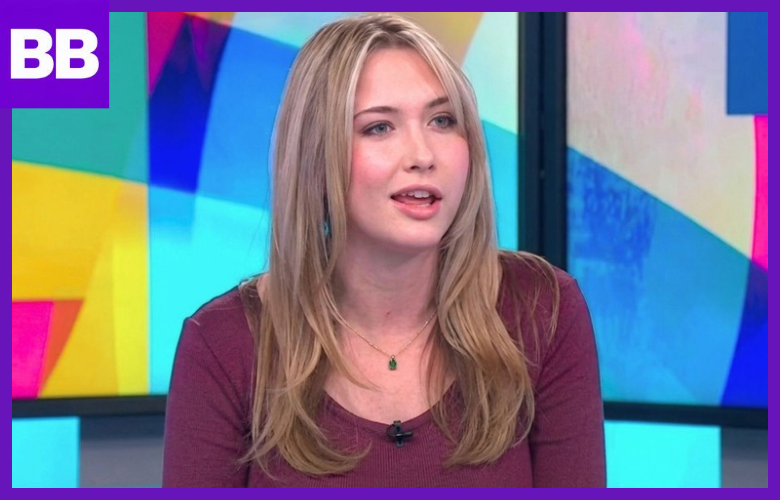
On 5 September 2026, The Telegraph ran a 3,400-word piece headlined “How having a disability became cool.” It argued that young women nicknamed “sickfluencers” are turning chronic illness into a lifestyle trend. The byline read Poppy Coburn, Associate Comment Editor. Within days, plenty of readers were searching her name to find out who she is and where she came from.
The short version is that Poppy Coburn is a young British journalist who has moved quickly through one of the country’s best-known opinion desks. The longer version, covered below, is more interesting, and it also has some gaps.
Quick Biography
| Category | Details |
|---|---|
| Full name | Poppy Coburn |
| Born | Not publicly confirmed |
| Birthplace | Not publicly confirmed |
| Profession | Journalist, opinion writer and editor |
| Nationality | British, according to profiles that describe her this way |
| Based in | London, per her public profile |
| Known for | Commissioning and writing opinion at The Daily Telegraph |
| Education | B.A. (Hons) in History and Politics, University of Cambridge |
From Cambridge to the comment desk
Coburn’s education is the best-documented part of her story. She studied History and Politics at Cambridge, with a particular focus on the political philosopher Thomas Hobbes. The same biography adds that she was a Publius Fellow at the Claremont Institute, the California think tank. That detail explains why her commentary often looks across the Atlantic as well as at Westminster.
Her professional timeline comes mostly from secondary profiles, so the dates are worth treating with some care. Several of them agree on the outline. She worked as a freelance writer for The Telegraph from April 2021, and she was promoted to Assistant Comment Editor in August 2023. One profile says the paper lists her as Associate Comment Editor, a post she has held since August 2023, and that her older title still appears on some pages. That would explain the mix of job titles you see online. Her current title is confirmed by the September 2026 byline.
The Telegraph’s own author page for her is the best place to confirm her exact job history, since it is the nearest thing to an official record.
What the job involves
A comment editor doesn’t just write columns. The role means commissioning pieces, shaping other people’s arguments and deciding what the opinion pages should be talking about that week. One profile describes her role as commissioning, editing and curating opinion columns. That is a fairly senior editorial job for someone who is, by most estimates, still in her twenties.
Her writing has also appeared elsewhere. She has written and worked for a variety of publications, including print, online and broadcast outlets. That is a typical route for a younger commentator now, and it helps explain how her name has travelled beyond the Telegraph’s readership.
The “young new right” conversation
Much of the public interest in Coburn comes from where she sits in British political debate. She has appeared on a podcast episode titled “The Young New Right in the UK.” The conversation covers how she describes her own politics and whether the Conservative Party has really changed since its 2024 defeat. It also covers Brexit and whether the political class has done the thinking needed for a nationalist policy agenda.
Those are her views as summarised by the show’s own notes, so anyone who wants her actual position should listen to the episode or read her columns. Some profiles call her bold or independent. That is opinion, not reporting, and it says more about the writer of each profile than about her.
The September 2026 column
The disability piece is what pushed her name into search results. One profile says the column brought a backlash that carried her beyond the opinion pages. Online discussion followed quickly. One discussion thread about the article questioned a statistic in it, a claim that one in four British people is now disabled and attributed to a government survey. That shows readers were checking the figures, but a single thread proves little about whether the number was right.
How big the controversy really was is hard to judge from here. Many of the articles describing it are thin write-ups. Readers who want to judge the column should read it directly and compare it with the survey it cites. Disability groups and other commentators have their own responses, and those are better places to look than a profile page.
What hasn’t been confirmed
A lot of the searches around her name are for details that nobody reliable has published.
Age. No birth date is public. One profile estimates she is in her mid-to-late twenties, working back from a 2021 Cambridge graduation. That is an inference, not a fact.
Family and relationships. Nothing credible is available. Some profiles claim she is deliberately private, but a missing record does not tell us her reasons.
Net worth. No reliable figure exists. Any number you see online is a guess.
Encyclopedia entry. One profile says it found no dedicated reference page for her. I could not find one either.
Some of the biographies circulating online also contradict each other. A few describe her as an influencer or a rising celebrity, which doesn’t fit what is actually documented. A couple of other details turn up in only one place, including a podcast co-hosting role and a 2023 appearance on another show. I have left those out because I couldn’t confirm them.
Not to be confused with Jo Coburn
Search results mix up several people with similar names. Jo Coburn, born in 1967, is a British political journalist and presenter, a different person at a different stage of her career. There is also a writer called Poppy Cockburn, and the musician Amelia Coburn. Check the spelling and the employer before assuming anything.
Why she keeps turning up in searches
There is nothing mysterious about the interest. She is young, she holds a visible post on a national newspaper, and she has written at least one piece that drew wide attention. She also works in a corner of British politics that many readers want to understand better. Whether people agree with her writing or not, the curiosity is easy to explain.
What is missing is the sort of long profile or interview that would fill in the personal side. Until that appears, the confirmed picture is a Cambridge-educated writer who started freelancing for The Telegraph in 2021 and now edits opinion there.
Final thoughts
Poppy Coburn’s story is mainly a career story, and a quick one. The facts that can be checked are her Cambridge degree, her Claremont fellowship, her post on the Telegraph comment desk, and the September 2026 column. Her age, family and finances can’t be confirmed from reliable sources. Anyone who wants to understand her work should start with her own bylines. Everything else online is secondhand.
What to keep in mind when reading about her
Separate what Poppy Coburn has published from what others have written about her. Her columns, her editorial role, and her podcast appearances can be checked directly. Ages, family details, income figures, and political labels mostly come from third-party profiles that copy one another, so treat anything without a clear source as unconfirmed.

3 Comments
Pingback: Alessia Russo Partner: The Question Everyone Asks, and the Answer She Has Never Given
Pingback: Karen Carney Partner: Glitterball Glory, a Guarded Private Life and the Truth Behind the Rumours
Pingback: Storm to Hit Britain This Weekend Arrived Twice: Austen Broke the South, Boelo Went for the North