


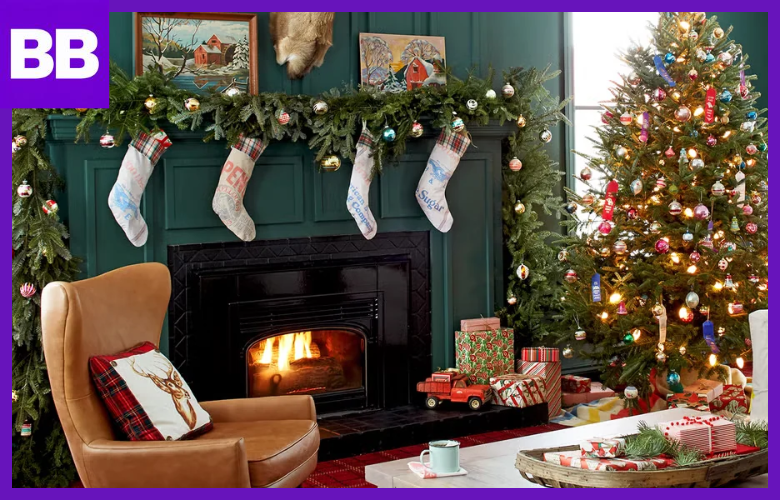
Every December, millions of people haul a box down from the attic and unwrap a glass bird that has been clipped to the same branch for thirty years. Christmas decorations are strange that way. They are cheap, fragile, and mostly impractical, yet people guard them like heirlooms. The habits behind them go back centuries, and a few of the most familiar ones started with a magazine illustration, a fire scare, and a small German town known for glassblowing. Here is where the traditions came from, plus some advice on decorating well this year.
Where Christmas decorations actually came from
Bringing greenery indoors in midwinter is much older than Christmas trees. Evergreen branches were a sign of life in the dark months long before anyone hung a bauble on one. The decorated Christmas tree as we know it is usually traced to German-speaking regions of Europe, where fir trees were being brought into homes and guildhalls and trimmed with edible things like apples and sweets.
What turned a regional custom into a global one was publicity. In 1848, the Illustrated London News published an engraving of Queen Victoria, Prince Albert and their children gathered around a decorated tree. The image circulated widely, and a version of it was reprinted in the United States soon after. Households on both sides of the Atlantic began copying the look.
The ornaments that changed everything
For a long time, trees were trimmed with whatever people had on hand: fruit, nuts, paper, candles. Glass ornaments changed that. They are most often linked to Lauscha, a glassmaking town in Thuringia, Germany, where Hans Greiner is commonly credited with producing some of the earliest glass baubles in the mid-1800s.
The idea crossed the ocean through retail. The American retailer F.W. Woolworth began stocking German ornaments in 1880, and the story goes that they sold out almost immediately. Whatever the exact details, mass-market ornaments soon followed, and the tree became something you could buy rather than make from scratch.
Tinsel has its own history. It is often said to have started in 17th-century Germany as thin strips of real silver, meant to catch candlelight. Modern tinsel is made from far cheaper materials, but the idea is the same: make the tree shimmer.
From candles to Christmas lights
Early trees were lit with real candles, which is about as risky as it sounds. Electric lights arrived in the 1880s. Edward H. Johnson, an associate of Thomas Edison, is widely credited with displaying the first electrically lit Christmas tree in New York in 1882. These early strings were expensive and mostly a novelty for wealthy households.
Safer, cheaper lights became widespread in the early 20th century. A popular account credits a teenager, Albert Sadacca, with pushing his family’s novelty-lighting business toward Christmas strings after hearing about fires caused by candles. Whether or not every detail of that story holds up, it fits a real shift: lights became affordable, and the glowing tree became the centerpiece of the season.
Choosing Christmas decorations that actually suit your home
Walk into any store in November, and the range can be overwhelming. A few principles help narrow it down.
Start with a palette, not a theme. You don’t need a “woodland” or “winter wonderland” concept. Two or three colors you already like, whether that’s red and gold, white and silver, or something less traditional like deep green and copper, will keep the display from looking random.
Mix textures. A tree full of identical shiny balls can look flat. Combine matte and glossy finishes, add some natural elements like dried orange slices, pinecones, or wooden beads, and let a few oversized ornaments break up the pattern.
Save your sentimental pieces. Handmade ornaments, a child’s school craft, a souvenir from a trip: these are the Christmas decorations people remember. Mixing them with store-bought pieces is better than hiding them in the back.
Think beyond the tree. Wreaths, garlands on a staircase, candles on a mantel, a bowl of ornaments on a coffee table. Smaller touches spread across several rooms can feel more festive than one overloaded corner.
Lights: how many and how to hang them
Designers often suggest a rule of thumb of around 100 mini lights per foot of tree height for a full look, though it is a guideline rather than a rule, and plenty of people prefer a sparser, softer glow. A few practical points matter more than the number.
Wrap the lights around each branch from the trunk outward instead of just draping them across the front, which gives the tree depth. Check every string before you hang it, and discard any with frayed wires or cracked sockets. Use lights rated for the right setting, since indoor and outdoor strings are not interchangeable. LED strings run cooler and use less power than older incandescent ones, which is one reason many households have switched.
Keeping things safe
Decorating is more fun when nothing goes wrong. If you buy a natural tree, a fresh one with needles that hold firmly to the branches is the safest choice, and the stand needs water every day. Keep the tree away from fireplaces, radiators, and other heat sources. Don’t run several light strings and extension cords through one overloaded outlet, and turn lights off when you leave the house or go to bed. If you have pets or small children, move breakable ornaments higher up and keep tinsel and small decorations out of reach, since they can be swallowed.
Storing decorations so they last
Most of the money people lose on Christmas decorations is lost in January, when everything gets shoved into a box. A few minutes of care pays off. Wrap glass ornaments individually in tissue or soft paper, and use dividers or egg-carton-style trays if you have them. Wind light strings around a piece of cardboard or a spool so they don’t tangle. Label boxes by room or category, and store them somewhere dry and away from extreme heat or damp. Tree skirts, stockings, and fabric items keep better in breathable bags than in sealed plastic.
Buying new versus reusing
It is tempting to buy a new set every year, but some of the best-looking displays come from adding a few pieces at a time to a collection that already means something. Secondhand shops, estate sales and flea markets often have vintage glass ornaments and unusual figures that you won’t find in a big-box store. If you do buy new, think about whether you’ll still like it in five years. Classic shapes and simple colors age better than whatever happens to be in fashion this season.
The point of all of it
For all the history and the shopping advice, Christmas decorations are less about getting a perfect look than about marking time. The ornament your kid made in second grade, the lights you argue about untangling every year, the slightly crooked star on top: those are the details that make the season feel like yours. A tree that looks a little imperfect but tells a story will almost always beat one that looks like a showroom display. So pull out the boxes, put on some music, and trim it your own way. The tradition has always been flexible, and it has been shaped by ordinary households as much as by royalty or retailers.

1 Comment
Pingback: Helen Skelton Partner: Who She’s Been Linked To and What She Has Actually Said